

Crown Flash is a rare and visually stunning atmospheric phenomenon that occurs near cumulonimbus clouds. It is characterized by rapidly shifting beams or streaks of light near the cloud’s summit, often resembling an ethereal spotlight. This phenomenon, while rare and fleeting, has fascinated meteorologists and observers due to its striking beauty and the mysteries surrounding its occurrence.

The underlying cause of Crown Flash is tied to the interaction between sunlight and ice crystals within the upper reaches of cumulonimbus clouds. These clouds, typically associated with thunderstorms, contain towering vertical structures that extend into the upper troposphere or lower stratosphere.

Within these clouds, strong updrafts and turbulence keep ice crystals and supercooled water droplets in constant motion. Crown Flash specifically involves the realignment of these ice crystals due to the influence of a strong electric field generated by the storm cloud. As the storm’s electric field fluctuates, it alters the orientation of the hexagonal ice crystals suspended in the cloud. This dynamic reorientation changes the way sunlight is refracted, creating the appearance of shifting beams of light. The rapid motion of these streaks mirrors the fast-changing electric conditions in the storm, making Crown Flash a dynamic and mesmerizing phenomenon.
Crown Flash only occurs under specific conditions. These include:
- Thunderstorm Activity: The presence of a cumulonimbus cloud with intense electrical activity is crucial.
- Sunlight or Bright Light Source: The phenomenon requires sufficient sunlight to create the refractive effects.
- Strong Updrafts: These keep ice crystals suspended at the cloud tops, where the electric field can manipulate them.

Because of these stringent requirements, Crown Flash is not commonly observed. It is most likely to be seen during the peak of thunderstorm seasons when large and electrically active cumulonimbus clouds are more prevalent. The phenomenon of Crown Flash has been documented sporadically over the years, often mistaken for an optical illusion or a camera artifact.
An extremely rare meteorological phenomenon, crown flash, was first scientifically described in the journal Monthly Weather Review in 1885.
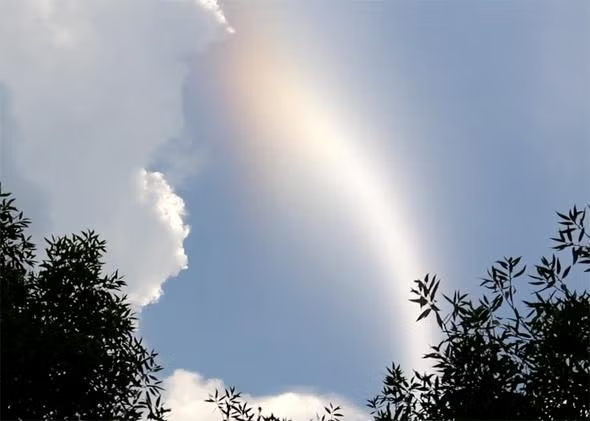
With advancements in high-speed cameras and increased public use of video recording devices, more examples have been captured, leading to a better understanding of the event. In earlier eras, Crown Flash was sometimes attributed to supernatural

or unexplained forces due to its sudden and enigmatic appearance. Modern meteorology has dispelled these notions, explaining the phenomenon through the principles of physics and cloud dynamics. Crown Flash serves as a reminder of the complexity and beauty of atmospheric phenomena. Its rarity makes it a prized sight for storm chasers and meteorological enthusiasts. By studying such events, scientists gain insights into the electrical properties of storms and the intricate behaviors of light in the atmosphere.
Further Reading


Sources
- Wikipedia https://en.wikipedia.org/wiki/Crown_flash
- Meteored “Crown Flash: meet this extremely rare phenomenon captured in the USA!” https://www.yourweather.co.uk/news/trending/crown-flash-rare-phenomenon-captured-in-the-usa-weather-light.html
- Guinness World Records “First description of a crown flash” https://www.guinnessworldrecords.com/world-records/400050-first-description-of-a-crown-flash
- DBPedia https://dbpedia.org/page/Crown_flash
