David Allan Coe, Roger Sweet, Gerry Conway, and Wayne Moss Die

Four more losses to reflect on here from April of 2026…

These guys were a singer and songwriter, with songs like “You Never Even Called Me by My Name”, “Longhaired Redneck”, “The Ride”; a designer, known for creating He-Man and the Masters of the Universe toy line; a comic book, science fiction, and television writer; and a guitar player, bassist, record producer and songwriter best known for his session work in Nashville.

Continue reading “David Allan Coe, Roger Sweet, Gerry Conway, and Wayne Moss Die”

Pamela Anderson on Playboy

An unprecedented run that made Anderson the most frequent Playboy cover model in the magazine’s history.

Pamela Denise Anderson’s association with Playboy magazine stands as one of the most enduring and recognizable relationships between a celebrity and a publication in modern popular culture. Born on July 1, 1967, in Ladysmith, British Columbia, Anderson’s entry into the public eye was sudden and unexpected. In 1989 she was shown on a stadium video screen during a British Columbia Lions

Continue reading “Pamela Anderson on Playboy”

The Argosy

Scholars often describe Argosy as a bellwether, a magazine whose shifts trace changing American tastes and whose legacy can be felt wherever serialized adventure still finds an audience.

Argosy began in the final decades of the nineteenth century as a bold experiment in mass-market fiction and became, over the next several generations, one of the most influential incubators of American popular storytelling. Its roots go back to the 1880s, when publisher Frank Munsey sought to create inexpensive reading for a growing audience of young readers and adults hungry for narrative entertainment.

Continue reading “The Argosy”

What Were Penny Dreadfuls?

They typically cost a penny per issue and featured sensational, often lurid stories of crime, horror, or adventure that were considered morally suspect or “dreadful”.

Penny dreadfuls were a form of cheap popular fiction that emerged in Britain during the early 19th century, primarily targeted at working-class youth. Originating around the 1830s, they were so named because they typically cost a penny per issue and featured sensational, often lurid stories of crime, horror, or adventure that were considered morally suspect or “dreadful” by the standards of polite society. They grew out of earlier forms of inexpensive literature like broadsides and chapbooks, and their rise coincided with the

Continue reading “What Were Penny Dreadfuls?”

Fangoria Magazine

By Issue #7, Fangoria had found its niche, focusing primarily on horror films, and its circulation steadily grew.

Fangoria Magazine, one of the most iconic publications for horror fans, was first published in 1979. Its origins can be traced to Starlog, a magazine that covered science fiction and fantasy. Publishers Norman Jacobs and Kerry O’Quinn initially planned for Fangoria to be a fantasy-based publication, but low sales forced them to pivot to horror, a genre that was experiencing a surge in popularity thanks to films like Halloween and Dawn of the Dead.

Continue reading “Fangoria Magazine”

Heavy Metal Magazine

The magazine was an American version of the French publication “Métal Hurlant”

Heavy Metal is a science fiction and fantasy magazine that first hit the shelves in April 1977. The magazine was an American version of the French publication “Métal Hurlant,” created by the artists Jean Giraud (Moebius), Philippe Druillet, Jean-Pierre Dionnet, and Bernard Farkas. The American version was initiated by Leonard Mogel[1], who was inspired by the innovative and visually stunning content of the French original.

Continue reading “Heavy Metal Magazine”

Electronic Games Magazine

This was the first dedicated video game magazine co-founded by Bill Kunkel, Joyce Worley, and Arnie Katz. The first issue was released in October of 1981 and ran until April 1985. They had met writing the “Arcade Alley” column, which ran from 1979 – 1984, in Video Magazine. This was the beginning of video game reviews and they gave them the depth that had not been considered before.

Continue reading “Electronic Games Magazine”

2022 – A Look at 100 Years Ago

What was happening 100 years ago this year?

We made it, through another year of the Covid pandemic, worsening at the end of 2021 with the Omicron variant. But it’s 2022. I never thought, as a child, that we would ever make it this far. I thought this would be a good time to look back 100 years to 1922.

Continue reading “2022 – A Look at 100 Years Ago”

TV Guide

What is on television tonight?

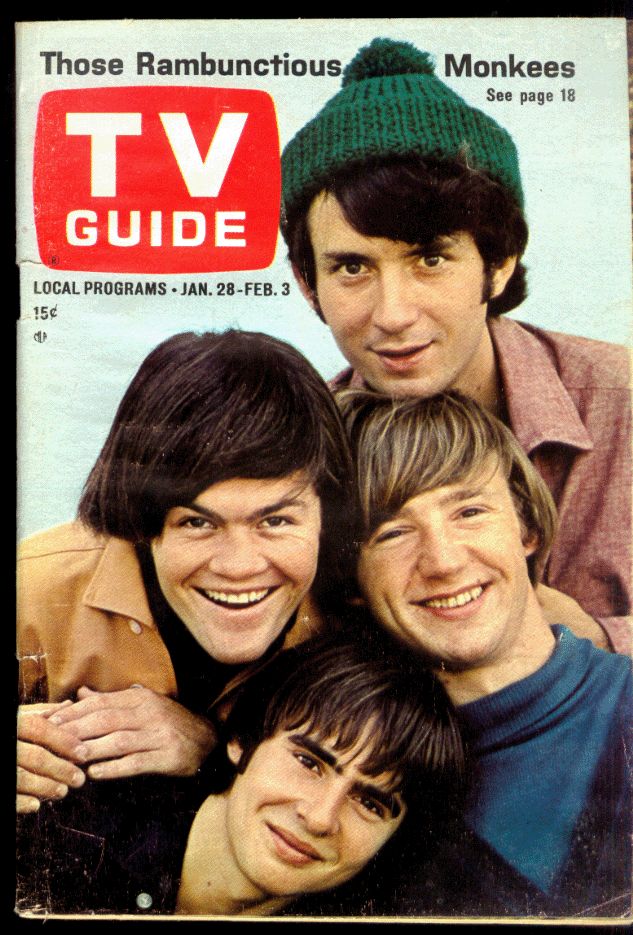
The magazine that would eventually become the classic “TV Guide” was developed by Lee Wagner (circulation director of MacFadden Publications in New York City). In 1948, he released “The TeleVision Guide” with New York City listings. The cover of the first issue featured Gloria Swanson who was star of the short lived “The Gloria Swanson Hour”. He would expand to the New England and the Baltimore–Washington areas. In 1953 he sold the editions to Walter Annenberg who folded the operation into his Triangle Publications.

Continue reading “TV Guide”

The Old Farmers Almanac

North America’s most popular reference guide and oldest continuously published periodical

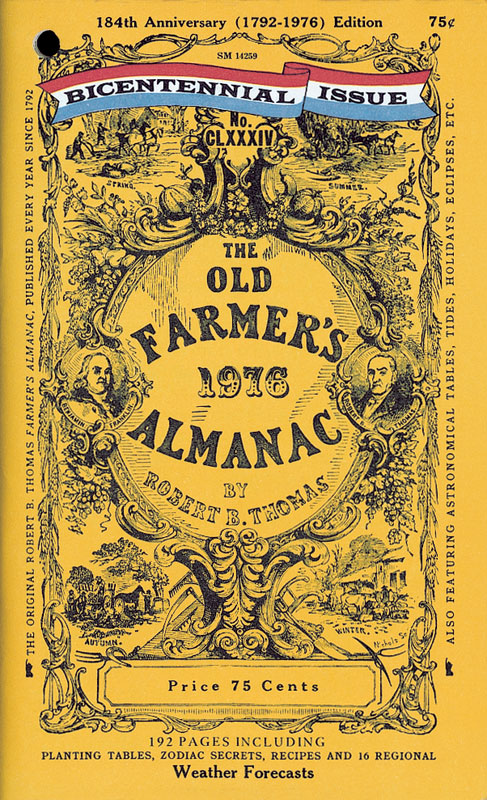
My grandfather, “Doc” Mize, was a farmer all his life. When I was a child, in the 1960’s, I remember him having The Old Farmers Almanac and planning his planting schedule around the forecasts within. Mother used to buy them for the articles and recipes and such. I used to check the almanac for the fishing charts to see when the fish would bite (but then I’d just go when I could). This magazine has been beloved for many years and probably years to come.

Continue reading “The Old Farmers Almanac”