

A powerhead, also known as a bang stick or shark stick, is a specialized underwater firearm designed to deliver a close-contact lethal blow to marine predators like sharks. Originating in the 1960s as a protective tool for divers, its primary purpose is self-defense in situations where divers may encounter aggressive marine animals.

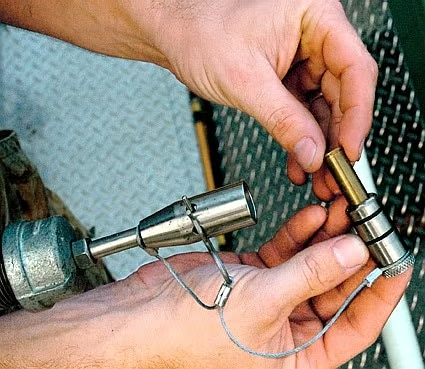
The powerhead is a contact-shot device, meaning it only discharges upon direct impact with a target, which enhances safety in underwater scenarios by preventing unintended discharges at a distance. Powerheads typically consist of a small, cylindrical chamber that holds a standard firearm cartridge.
The cartridges were water proofed several ways, they could be coated with nail polish, spar varnish or my favorite was a automobile radiator sealant. After one submersion they were always discarded.

They are often mounted on a spear, stick, or other extension, allowing the diver to maintain a safe distance while engaging the target. The design prioritizes compactness, simplicity, and ruggedness, given the underwater environment.

Materials such as stainless steel and other corrosion-resistant metals are used to withstand the harsh saltwater conditions. When the tip of the powerhead makes contact with a solid surface, the force triggers a firing pin that ignites the cartridge.

This produces a shockwave and a projectile that is powerful enough to neutralize even large marine predators instantly. In terms of ammunition, powerheads are versatile, generally compatible with commonly available cartridges such as .357 Magnum, .44 Magnum, or .223 caliber rounds.

Some designs also accommodate shotgun shells, depending on the size and specific application. The cartridge selection is largely determined by the type of predator divers are likely to encounter, with higher-caliber rounds being used against larger animals. Upon detonation, the resulting shockwave is exceptionally lethal in the confined, water-dense environment, as water’s higher density compared to air amplifies the concussive effect.

Trip wire alarms are practical and low-tech security devices designed to alert users when an intruder enters a specific area. The simplicity of a trip wire alarm—typically consisting of a wire or cord stretched across a path to be “tripped”—belies its effectiveness in providing a first line of defense. These alarms are often employed in various outdoor environments where more advanced security solutions are impractical or unavailable. Commonly used in remote properties, campsites, and military perimeters, trip wire alarms are an economical option for users seeking early warnings without sophisticated technology. Trip wire alarms are especially valuable in settings with minimal access to power or other technological resources, as their basic mechanism relies on mechanical, auditory, or visual cues. The basic components of a trip wire alarm include the trip wire itself, a trigger mechanism, and an alarm. The wire, often thin and camouflaged (such as fishing line or fine metal wire), is strategically positioned across paths an intruder might take. When someone or something pulls on the wire, it activates the trigger mechanism. The trigger is often connected to an alarm device, which may be a simple noise-maker like a bell, a non-lethal explosive, or a flashing light. Some setups are even designed to activate electric circuits that power sirens or lights, creating a clear alert. The simplicity of these components makes trip wire alarms highly customizable and adaptable to different security needs. For instance, some users incorporate small explosive charges, such as blanks or primers, to create a loud noise that can startle intruders and alert those nearby. There are several common types of trip wire alarms, including noise-based, electric, and non-lethal projectile alarms. Noise-based alarms, which use items like bear bangers or blank cartridges, are especially popular in camping and wilderness settings to ward off animals and alert campers of potential threats. Electric alarms can be set up to create louder, longer-lasting alerts but generally require a power source, which can be a limitation in some environments. Finally, non-lethal projectile alarms use paint or dye balls to mark intruders. These alarms are particularly useful for monitoring areas where identifying an intruder after the fact is beneficial, as they leave visual markers on the person who tripped the alarm. The practicality of trip wire alarms extends to several real-world uses. In military and tactical operations, for example, they serve as early-warning systems that can help detect enemy movement along sensitive perimeters. In outdoor recreational scenarios, trip wire alarms can alert campers to wildlife that might approach campsites, providing them with an opportunity to react before animals pose a threat. Moreover, rural property owners often set up trip wires around remote buildings or trails, using them to protect against unauthorized access or theft. Since these alarms are so versatile, they have also found application in survival and bushcraft communities, where simplicity, reliability, and low cost are key. Despite their effectiveness, trip wire alarms are not without limitations. One common drawback is the potential for false alarms caused by environmental factors, such as wind or small animals, which can inadvertently set off the alarm. Additionally, the range of a trip wire alarm is limited to the specific area it covers; it must be strategically placed for optimal effectiveness. A careful intruder might even spot the wire if it’s not well-hidden. However, in many cases, users are willing to overlook these issues because of the convenience and low cost of trip wire systems. These alarms remain a reliable choice for anyone needing a low-maintenance, first-alert security measure.

The principle of contact shooting is central to powerhead function and safety. Underwater, a projectile loses energy quickly due to drag from the water, rendering standard firearms less effective. The close-contact nature of the powerhead overcomes this limitation by delivering maximum energy directly to the target.

In the case of shark encounters, this direct impact ensures a quick, efficient response that neutralizes the threat immediately without harming surrounding marine life or other divers. The legality of powerheads varies significantly across jurisdictions.
In some countries, including certain U.S. states, powerheads are regulated like firearms, requiring permits or prohibiting their use altogether, except in extreme cases of self-defense. In other regions, they are more loosely regulated, provided they are used responsibly and strictly for defense against marine predators.
While commonly used by civilian divers, bang sticks have also been employed by military divers and Navy personnel, especially those involved in underwater demolition, reconnaissance, or Special Operations. Their function as a compact and effective underwater defensive tool makes them useful for high-risk underwater missions. However, the Navy primarily uses bang sticks as a last-resort defensive measure rather than for offensive purposes.

Regulatory bodies, such as the U.S. Fish and Wildlife Service or local wildlife authorities, may impose restrictions on powerheads due to concerns about potential misuse, particularly in protected marine environments. Conservation organizations also highlight ethical considerations,

emphasizing the importance of using non-lethal deterrents whenever possible to avoid unnecessarily harming marine species. In summary, the powerhead is a specialized tool created to protect divers in dangerous underwater situations. Its design ensures a powerful, close-contact strike effective against marine predators. While its function is clear, its use remains controversial, governed by a complex mix of legal and ethical considerations intended to balance human safety with marine conservation.
Further Reading


Sources
- Wikipedia “Powerhead (firearm)” https://en.wikipedia.org/wiki/Powerhead_(firearm)
- Wikipedia “Tripwire” https://en.wikipedia.org/wiki/Tripwire
- Gator Pro https://huntinglight.com/Bang-Stick-with-Power-Head-357-Magnum-spring-type
- Rod & Barrel https://rodnbarrel.com/post/98540142762/bang-stick-last-night-i-went-on-an-alligator
- Guns.com https://www.guns.com/news/2013/07/12/the-bangstick-keeping-sharks-and-gators-on-the-menu
