

Will Rogers, born William Penn Adair Rogers on November 4, 1879, was an American humorist, actor, cowboy, newspaper columnist, radio commentator, and social commentator who became one of the most popular entertainers in the United States during the 1920s and 1930s. He was born on his family’s ranch near Oologah in the Cherokee Nation of Indian Territory, which later became part of Oklahoma. His father, Clement Vann Rogers,

was a successful rancher, farmer, banker, Cherokee political leader, and judge who helped shape Oklahoma’s state constitution. His mother, Mary America Schrimsher Rogers, came from a Cherokee family and encouraged her children’s appreciation of literature, music, and humor. Will was the only son in a large family and grew up surrounded by the ranching traditions of the American frontier. His Cherokee heritage and experiences living among people from different backgrounds helped shape his appreciation for ordinary Americans and his belief in treating people with kindness and respect. Rogers attended several schools as a child, but he preferred ranch life and outdoor activities to classroom study.
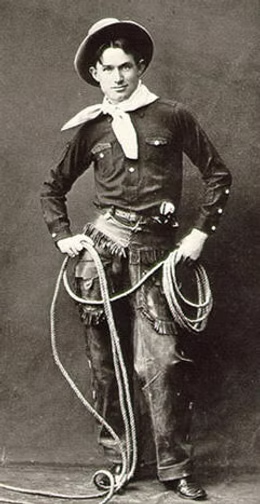
His father wanted him to receive a good education, and Will eventually attended the Willie Hassell School in Neosho, Missouri, and Kemper Military School in Boonville, Missouri. He was not an enthusiastic student and left school as a teenager, later joking about his lack of academic achievement. He was far more interested in horses, cattle, and the art of roping. He learned to use a lariat while working on the family ranch, eventually developing extraordinary skill with a rope. His ability to perform elaborate tricks would become the foundation of his entertainment career. After leaving school, he worked as a cowboy in Texas

before traveling abroad in search of adventure and employment. His experiences in Argentina, South Africa, and Australia broadened his understanding of the world and provided stories that later enriched his humor. Rogers began his professional entertainment career in the early 1900s, performing as a cowboy and trick roper in Wild West shows. In South Africa, he joined Texas Jack’s Wild West Show and became known as the Cherokee Kid.

After touring Australia, he returned to the United States and joined the Wild West show operated by Zack Mulhall. His roping skills and relaxed personality attracted attention, and an incident involving a steer that entered the audience at Madison Square Garden in New York in 1905 helped bring him wider publicity. Rogers eventually moved beyond roping demonstrations and began incorporating jokes and spontaneous conversation into his performances.

His natural ability to entertain audiences led him to vaudeville and, in 1915, the prestigious Ziegfeld Follies in New York City. Encouraged by his wife, Betty, he began discussing current events and politics during his act. His friendly, plainspoken observations proved as entertaining as his rope tricks, and he gradually established himself as a nationally recognized humorist. Rogers entered the motion-picture business in 1918, appearing in the silent film Laughing Bill Hyde.

He subsequently worked with Goldwyn Pictures and became a popular screen performer, appearing in numerous silent comedies and other productions. When sound films became widespread, he successfully made the transition to talking pictures, a feat that some silent-film stars struggled to accomplish. He signed with Fox Film Corporation and appeared in a succession of successful films during the early 1930s. Among his notable pictures were State Fair (1933),

Doctor Bull (1933), David Harum (1934), and Judge Priest (1934), directed by John Ford. His screen persona was built around the same qualities that made him popular onstage: warmth, common sense, homespun humor, and an ability to make audiences feel that he was speaking directly to them. By 1934, he was one of Hollywood’s highest-paid and most popular stars. Rogers also became one of America’s most widely read newspaper columnists.

Beginning in the early 1920s, he wrote syndicated columns that commented on politics, government, international affairs, business, and everyday life. His observations frequently poked fun at politicians and public officials, but his humor generally avoided bitterness and personal cruelty. He was particularly skilled at exposing contradictions in political speeches and public policy through simple, memorable remarks. One of his best-known sayings was, “I never met a man I didn’t like,” which captured the genial public image he cultivated, although the statement was not intended as a literal description of every person he encountered. His writing reached millions of readers,

and his columns helped establish him as a trusted national commentator. Rogers also became a popular radio personality, delivering informal talks that combined humor with commentary on the news. During the Great Depression, his reassuring manner and ability to find comedy in difficult circumstances made him especially beloved by American audiences.
Silent_Films
- Laughing Bill Hyde (1918, film debut) – Bill Hyde
- Almost a Husband (1919) – Sam Lyman
- Jubilo (1919) – Jubilo
- Water, Water, Everywhere (1920) – Billy Fortune
- The Strange Boarder (1920) – Sam Gardner
- Jes’ Call Me Jim (1920) – Jim Fenton
- Cupid the Cowpuncher (1920) – Alec Lloyd
- Honest Hutch (1920) – Hutch
- Guile of Women (1920) – Hjalmar Maartens
- The Illiterate Digest (1920)
- Boys Will Be Boys (1921) – Peep O’Day
- An Unwilling Hero (1921) – Dick
- Doubling for Romeo (1921) – Sam Cody / Romeo
- A Poor Relation (1921) – Noah Vale
- One Glorious Day (1922) – Professor Ezra Botts
- The Ropin’ Fool (1922, Short) – ‘Ropes’ Reilly (the ropin’ fool)
- The Headless Horseman (1922) – Ichabod Crane
- Fruits of Faith (1922, Short) – Larry
- One Day in 365 (1922, unreleased)
- Hollywood (1923) – Himself
- Jus’ Passin’ Through (1923, Short) – Jubilo
- Hustling Hank (1923, Short) – Hank
- Uncensored Movies (1923, Short) – Lem Skagwillow
- Two Wagons Both Covered (1923, Short) – Bill Bunian / Joe Jackson
- The Cowboy Sheik (1924, Short) – Two Straw Bill
- The Cake Eater (1924, Short)
- High Brow Stuff (1924, Short)
- Going to Congress (1924, Short) – Alfalfa Doolittle
- Don’t Park There (1924, Short)
- Big Moments From Little Pictures (1924, Short) – Himself / Rufus the bullfighter / Robin Hood / Son / Police Chief
- Jubilo, Jr. (1924, Short) (part of the Our Gang series) – Himself
- Our Congressman (1924, Short) – Alfalfa Doolittle
- A Truthful Liar (1924, Short) – Ambassador Alfalfa Doolittle
- Gee Whiz Genevieve (1924, Short)
- Tip Toes (1927) – Uncle Hen Kaye
- A Texas Steer (1927) – Cattle Brander
Sound_Films
- Happy Days (1929) – Minstrel Show Performer
- They Had to See Paris (1929) – Pike Peters
- So This Is London (1930) – Hiram Draper
- Lightnin’ (1930) – Lightnin’ Bill Jones
- A Connecticut Yankee (1931) – Hank Martin
- Young as You Feel (1931) – Lemuel Morehouse
- Ambassador Bill (1931) – Bill Harper
- Business and Pleasure (1932) – Earl Tinker
- Down to Earth (1932) – Pike Peters
- Too Busy to Work (1932) – Jubilo
- State Fair (1933) – Abel Frake
- Doctor Bull (1933) – Dr. George ‘Doc’ Bull
- Mr. Skitch (1933) – Mr. Ira Skitch
- David Harum (1934) – David Harum
- Handy Andy (1934) – Andrew Yates
- Judge Priest (1934) – Judge Priest
- The County Chairman (1935) – Jim Hackler
- Life Begins at 40 (1935) – Kenesaw H. Clark
- Doubting Thomas (1935) – Thomas Brown
- Steamboat Round the Bend (1935) – Doctor John Pearly
- In Old Kentucky (1935) – Steve Tapley (final film role)
Books
- Rogers, Will (1975) [1924]. Joseph A. Stout, Jr. (ed.). Rogers-isms: The Cowboy Philosopher On Prohibition. Stillwater: Oklahoma State University Press. ISBN 0-914956-06-X.
- Rogers, Will (2003) [1924]. Illiterate Digest. Kessinger Publishing. ISBN 978-0-7661-4321-0.
- Rogers, Will (1977) [1926]. Joseph A. Stout (ed.). Letters of a Self-Made Diplomat To His President. Stillwater: Oklahoma State University Press. ISBN 0-914956-09-4.
- Rogers, Will (1982). Steven K. Gragert (ed.). More letters of a self-made diplomat. Stillwater: Oklahoma State University Press. ISBN 978-0-914956-22-8.
- Rogers, Will (1927). There’s Not A Bathing Suit in Russia.
- Rogers, Will (1982) [1928]. “He chews to run”: Will Rogers’ Life magazine articles, 1928. Stillwater: Oklahoma State University Press. ISBN 0-914956-20-5.
- Rogers, Will (1983). Steven K. Gragert (ed.). Radio Broadcasts of Will Rogers. Stillwater: Oklahoma State University Press. ISBN 0-914956-24-8.
- Sterling, Bryan and Frances (2001). Forgotten Eagle: Wiley Post: America’s Heroic Aviation Pioneer. New York: Carroll & Graf Publishers. ISBN 0-7867-0894-8.
- Rogers, Will (1926). Letters of a Self-Made Diplomat to His President
- Rogers, Will, and Joseph H. Carter. Never Met a Man I Didn’t Like (1991) excerpt and text search
- Rogers, Will. Will Rogers at the Ziegfeld Follies. ed. by Arthur Frank Wertheim, (1992). 288 pp.
- Rogers, Will. Will Rogers’ Weekly Articles. Vol. 1, The Harding/Coolidge Years, 1922–1925. ed. by James M. Smallwood, (1980). 431 pp.
- Rogers, Will. Will Rogers’ Weekly Articles. Vol. 2: The Coolidge Years, 1925–1927. ed. by Steven K. Gragert, (1980). 368 pp.
- Rogers, Will. Will Rogers’ Weekly Articles. Vol. 3: The Coolidge Years, 1927–1929. ed. by Steven K. Gragert, (1981). 304 pp.
- Rogers, Will. Will Rogers’ Weekly Articles. Vol. 4: The Hoover Years, 1929–1931. ed. by Steven K. Gragert, (1981). 278 pp.
- Rogers, Will. Will Rogers’ Daily Telegrams. Vol. l, The Coolidge Years, 1926–1929. ed. by James M. Smallwood, 1978. 453 pp.
- Rogers, Will. Will Rogers’ Daily Telegrams. Vol. 4, The Roosevelt Years, 1933–1935. ed. by James M. Smallwood, (1979). 457 pp.
- Rogers, Will. Convention Articles of Will Rogers. ed. by Joseph A. Stout, 1976. 174 pp.
- Rogers, Will. The Writings of Will Rogers. Volume 3: Illiterate Digest. ed. by Joseph A. Stout, Jr., 1974. 230 pp.
- Rogers, Will (1948). Day, Donald (ed.). Autobiography of Will Rogers; Selected and Edited by Donald Day. Boston: Houghton Mifflin.
- Rogers, Will. Rogers-isms: the Cowboy Philosopher on the Peace Conference, (1919). Online at Project Gutenberg
- Sterling, Bryan B., and Frances N. Sterling, eds. Will Rogers Speaks: Over 1,000 Timeless Quotations for Public Speakers (And Writers, Politicians Comedians, Browsers) (1995).

Away from entertainment, Rogers was known for his generosity and humanitarian work. He participated in charitable performances and fundraising campaigns, supporting relief efforts for people affected by floods, droughts, earthquakes, and other disasters. He traveled to help raise money for victims of the Mississippi River flood of 1927

and participated in relief efforts following an earthquake in Nicaragua in 1931. He also supported causes benefiting Native Americans and helped promote the establishment of a hospital serving Native American communities in Oklahoma. Although he became wealthy and internationally famous, Rogers maintained a reputation for modesty and friendliness. He was interested in aviation and believed airplanes offered a promising way to connect distant communities. He became friends with several prominent aviators,

including Charles Lindbergh, and frequently traveled by air. His celebrity also brought him honorary recognition, including being named honorary mayor of Beverly Hills, California, in 1926. His enduring achievement was not a single formal award but the extraordinary public affection he earned through his entertainment, writing, and charitable activities. On November 25, 1908, Rogers married Betty Blake, whom he had met while performing in the entertainment business.

Their marriage lasted until his death, and Betty played an important role in his career, encouraging his development as a political humorist and helping manage aspects of their family life. They had four children: Will Rogers Jr., Mary, James, and Fred. Fred died in infancy, while the other three survived to adulthood. Will Jr. later became an actor and served in the United States Congress. The family maintained homes in California and Oklahoma, and Rogers hoped eventually to spend more time on his Oklahoma property.

Despite his demanding professional schedule, he was devoted to his family and often spoke affectionately about his wife and children. His public image as a friendly, approachable man reflected the way he generally conducted himself privately. Rogers’s life ended suddenly on Thursday, August 15, 1935, when he was killed in an airplane crash near Point Barrow, Alaska Territory,

while traveling with his friend, the pioneering aviator Wiley Post. The two men were exploring a possible air route across Alaska toward the Soviet Union. After stopping near Fairbanks, they continued north in Post’s aircraft. During a landing near a lagoon outside Barrow, they sought directions before taking off again. Shortly after departure,

the engine failed, and the plane crashed, killing both men instantly. Rogers was 55 years old. His death shocked the nation, and tributes poured in from political leaders, entertainers, newspaper readers, and ordinary Americans who had regarded him as a trusted friend. He was initially buried in California, but his remains were later moved to the Will Rogers Memorial in Claremore, Oklahoma.

His wife, Betty, survived him, along with his children Will Jr., Mary, and James; Betty was later buried beside him. The Will Rogers Memorial Museum preserves his papers and memorabilia, while his former home in California is now Will Rogers State Historic Park. Rogers remains remembered as one of America’s great humorists, a pioneering multimedia celebrity, and a commentator whose wit and humanity allowed him to criticize powerful people while remaining warmly connected to the public.
Further Reading


Sources
- Wikipedia “Will Rogers” https://en.wikipedia.org/wiki/Will_Rogers#Filmography
- Oklahoma Historical Society “ROGERS, WILLIAM PENN ADAIR (1879–1935)” https://www.okhistory.org/publications/enc/entry?entry=RO021
