
Pluto is a Dwarf planet, with 5 moons, that lies beyond Neptune in the Kuiper Belt. It was discovered in 1930 by Clyde Tombaugh who worked at the Lowell Observatory in Flagstaff, Arizona from 1929 to 1945.
Pluto is a Dwarf planet, with 5 moons, that lies beyond Neptune in the Kuiper Belt. It was discovered in 1930 by Clyde Tombaugh who worked at the Lowell Observatory in Flagstaff, Arizona from 1929 to 1945.

Toilet Paper was recorded being used in China in the 6th century AD and mass production in the 14th century. I will be concerned here with the toilet paper, in rolls, that we are used to today. The first known patent was in 1883 for a roll dispenser with a cutting edge since the rolls were not perforated yet. In 1891, inventor of perforated rolls, Seth Wheeler obtained a patent. His drawings clear up the proper way to hang a roll of Toilet Paper.

I remember how great Solarcaine was when I was young. It was the difference in being in serious sunburn pain or being able to sleep. Back then it contained Benzocaine which is good for pain and itching caused by sunburn, other minor burns, insect bites or stings, poison ivy, poison oak, poison sumac, minor cuts or scratches. It was available without a prescription and made by Plough Inc, founded in Memphis (1908), by Abe Plough.

I watched the, Martin Scorsese, 2017 historical drama “The Current War” on Netflix DVD. It is about the battle of alternating current versus direct current in the late 1800’s. Thomas Edison is played by Benedict Cumberbatch (TV’s Sherlock, Khan in Star Trek Into Darkness and Doctor Strange in the Marvel movies), George Westinghouse is portrayed by Michael Shannon (Groundhog Day, 8 Mile, Pearl Harbor, Bad Boys II, Man of Steel and Knives Out) and Nicola Tesla is played by Nicholas Hoult

(A Single Man, Clash of the Titans, X-Men: First Class, Jack the Giant Killer and Tolkien). It was directed by Alfonso Gomez-Rejon (Glee, American Horror Story: Coven) and written by Michael Mitnick. The story is excellent at showing the ruthlessness of Edison to get his DC no matter what, Westinghouse to do what is right and the genius of Tesla. I enjoyed this movie and will give it 4.8 out of 5.
Click read more for the trailer and videos on the science involved.
Continue reading “The Current War (2017)”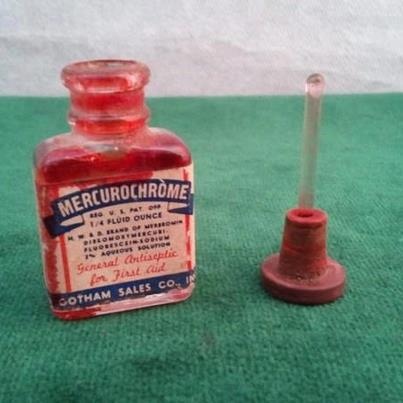
When there was a scrape or cut in my childhood home, and there were many, out came the rubbing alcohol or hydrogen peroxide or Mercurochrome or the Merthiolate! Merbromin was a chemical compound that contained carbon, hydrogen, bromine, mercury, sodium, and oxygen atoms.

I work at Stacy’s Compounding Pharmacy, in Atlanta, and since the pandemic struck we get customers occasionally coming in telling us that the CDC has said that masks do no good for stopping Covid-19.

I decided to do a little research and find out for myself. The first thing I did was ask our pharmacist, Kelly Howard. She has a friend working with Covid at the CDC and she says that masks were highly recommended.

Their website wants people to wear masks in public settings, around people not in your own household, especially when social distancing is not possible. The CDC goes on the say that they should not be worn by children under two years old,

people that may have trouble breathing, unconscious, incapacitated or unable to remove their own mask. They also agree with common sense saying that your mask acts as a barrier to prevent your respiratory droplets, which carry the virus, from traveling through the air and onto other people or surfaces. Wearing a mask with an exhalation valve or vent defeats the purpose, allowing droplets to escape into the air.

Super glue was invented in 1942 by Dr. Harry Coover. While working on wartime gun sights he discovered an extraordinarily sticky chemical compound but saw no value. It was well later that Coover realized the possibilities for this cyanoacrylate as a glue.

I watched The Simulation Hypothesis on Amazon Prime. The hypothesis is that everything, the earth, the universe, is a simulation, and that you are existing in a reality that seems real to you but you are just living in a computer simulation. The simulation would be so real that living in it would seem normal. Many fantasy and sci-fi TV shows and movies (like The Matrix) have taken advantage of this theory.
Read more about the documentary on IMDB and more about Simulation hypothesis on Wikipedia, Scienticamerican.com, Techrepublic.com, NBCnews.com and Vox.com . I give this documentary 4.8 out of 5.

Microdots are text micronized into, usually, a round dot, typically the size of a period or the dot at the top of say an i or j.

Ernő Rubik invented the cube in 1974 as a tool to help students understand 3d objects, moving parts independently without the mechanism falling apart.

